
How to Ask Guests for a Review (Message Templates That Work)
Review-request message templates for Airbnb hosts: what to send, when to send it, and how to follow up without nagging.
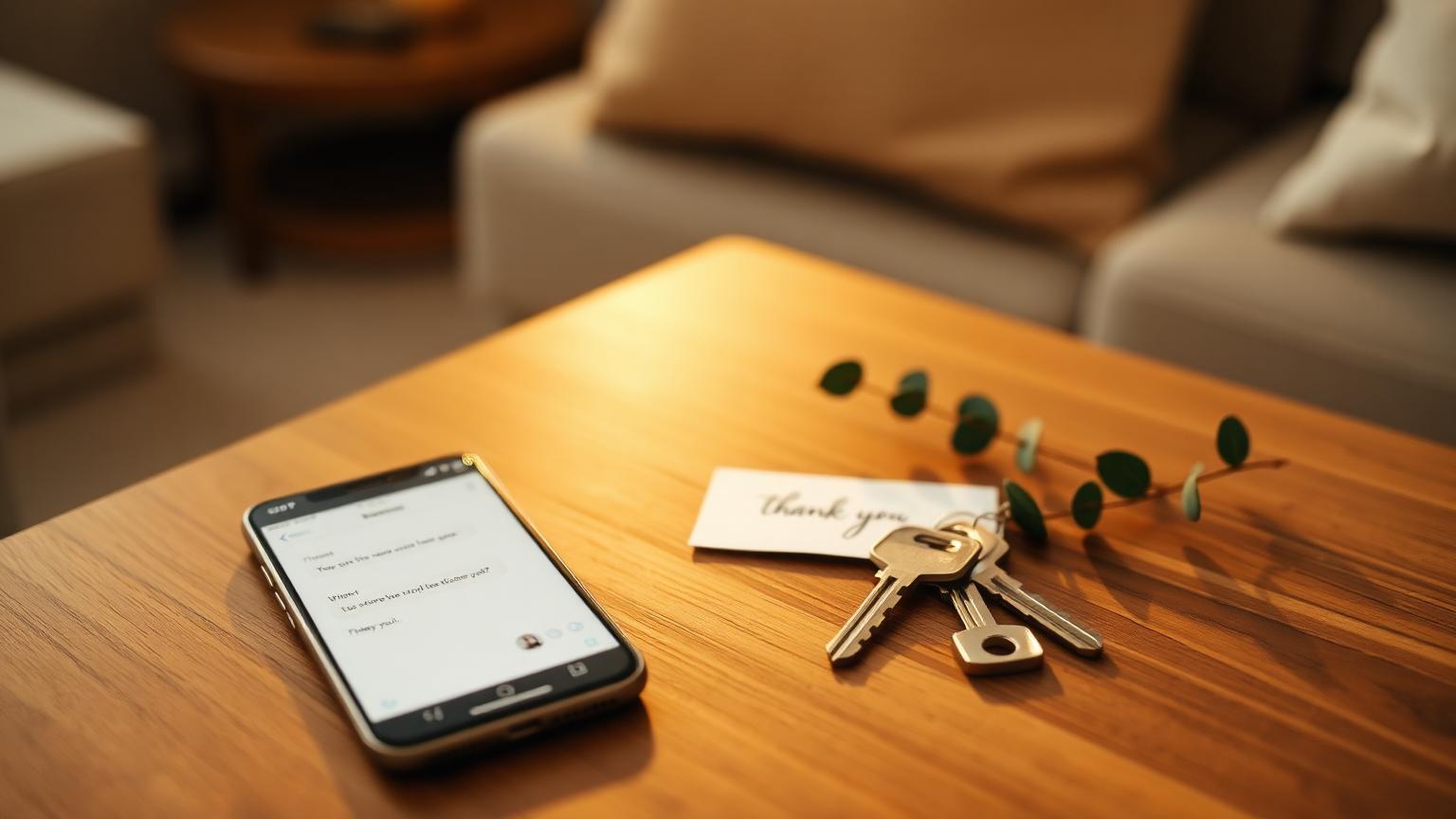
Roughly a third of stays end without a review. Not because the guest was unhappy — because they got home, unpacked, went back to work, and forgot.
The fix is unglamorous: ask, once, at the right moment, in a way that takes them thirty seconds. Below are the messages we would actually send, plus the timing that makes the difference.
The one rule: ask after you have already given something
A review request lands very differently depending on what came before it. If the last thing a guest heard from you was a checkout reminder about the bins, asking for five stars feels like a bill.
If the last thing they heard was you being useful — the taxi number, the umbrella when it rained, the late checkout you waved through — the ask feels like a favour returned. So the sequence matters more than the wording.
Timing: 24 hours after checkout, not on checkout day
Checkout day is chaos. They are dragging a suitcase to an airport and are not writing prose about your kitchen.
The window that works is roughly 12 to 36 hours after checkout, when the trip still feels good and the admin has calmed down. Airbnb also nudges guests itself, so your message is often the second reminder, not the first — keep it short so it does not feel like the third.
One ask. One gentle follow-up around day five if nothing appears. Then stop. A third message costs you goodwill and gains you nothing.
Template 1 — the standard ask (stay went fine)
"Hi Marta — hope the trip home was easy. It was genuinely nice having you at the apartment. If you have a spare minute, a short review really helps other guests decide, and it helps us keep the place booked. I have left you one too. Safe travels — Jess"
Why it works: it is short, it names them, it gives a reason (helps other guests), and it mentions you have already reviewed them, which triggers reciprocity without demanding anything.
What to cut: never write "a 5-star review". Asking for a specific rating breaks Airbnb's review policy and reads as pressure. Ask for a review; let the stay decide the number.
Template 2 — the stay had a hiccup you fixed
"Hi Daniel — thanks again for your patience with the hot water on Tuesday. The plumber has replaced the element, so that one is properly sorted. If you are happy to leave a review, honest is fine — I would rather know what to fix than get a polite one. Thanks for being easy to host."
Counter-intuitive, but inviting honesty after a problem usually produces a better review than avoiding the subject. Guests who feel heard grade generously. Guests who feel managed do not.
Do not offer anything in exchange for a review — no refunds, no discounts, no gift cards. That is a policy breach and it can get the review removed.
Template 3 — the quiet follow-up (day five)
"Hi Marta — no pressure at all, just a quick nudge in case the review slipped your mind. Takes about a minute and it makes a real difference to a small operation like ours. Either way, you are welcome back any time."
That is the last one. If they do not review after this, they were never going to, and chasing further reads as desperate.
Template 4 — the long-stay or repeat guest
"Hi Tom — three weeks and the place looks like nobody was in it, which is rare. If you get a moment for a review it would mean a lot, especially for longer stays where guests want to know what living there is actually like. And if you are back in town, message me directly and I will sort the dates."
Long-stay reviews are disproportionately useful because so few listings have them, and the direct-booking hint at the end is doing quiet second work.
Responding to reviews you did not want
A calm public reply matters more than the review itself, because future guests read the reply as evidence of how you handle problems.
"Thanks for the feedback, Anna. The noise from the building work was outside our control but we should have flagged it before arrival — we have added a note to the listing and offered affected guests a partial refund. Sorry it took the shine off the stay."
Acknowledge, state what changed, stop. No paragraph-long defence, no correcting their version of events. Anyone reading it is judging your tone, not adjudicating the dispute.
Where reviews are actually won
None of these templates rescue a stay where the guest spent Saturday night hunting for the Wi-Fi password. The review is decided during the stay, in the moments where a guest either gets an answer or sits there mildly annoyed.
That is the argument for putting your house information somewhere guests can interrogate at 11pm without messaging you — an AI welcome book does exactly that, and it means the messages you do send can be the warm ones rather than the where-is-the-bin-day ones.
If you also write reviews of your guests, our guest review templates post covers the other direction. And if the ultimate goal here is Superhost status, review volume is one of the four criteria — which is why the ask matters at all.
The honest close
Templates are a starting point, not a script. Change a clause so it sounds like you, use the guest's name, and reference one real thing from their stay — the dog, the wedding, the fact they left the kitchen spotless.
The hosts with hundreds of reviews are not better writers. They just ask, every single time, and they ask like a person.
More on Guest Communication
Go deeper on this
Ready to give guests an easier way to find property answers?
ValAi is the AI property concierge for Airbnb hosts. Guests open your Guest SmartLink (or an optional QR code), ask a question, and get an answer from your own property information — 24/7, in 30+ languages.
Build & test my concierge free